
How to Search Saratoga County Property Records
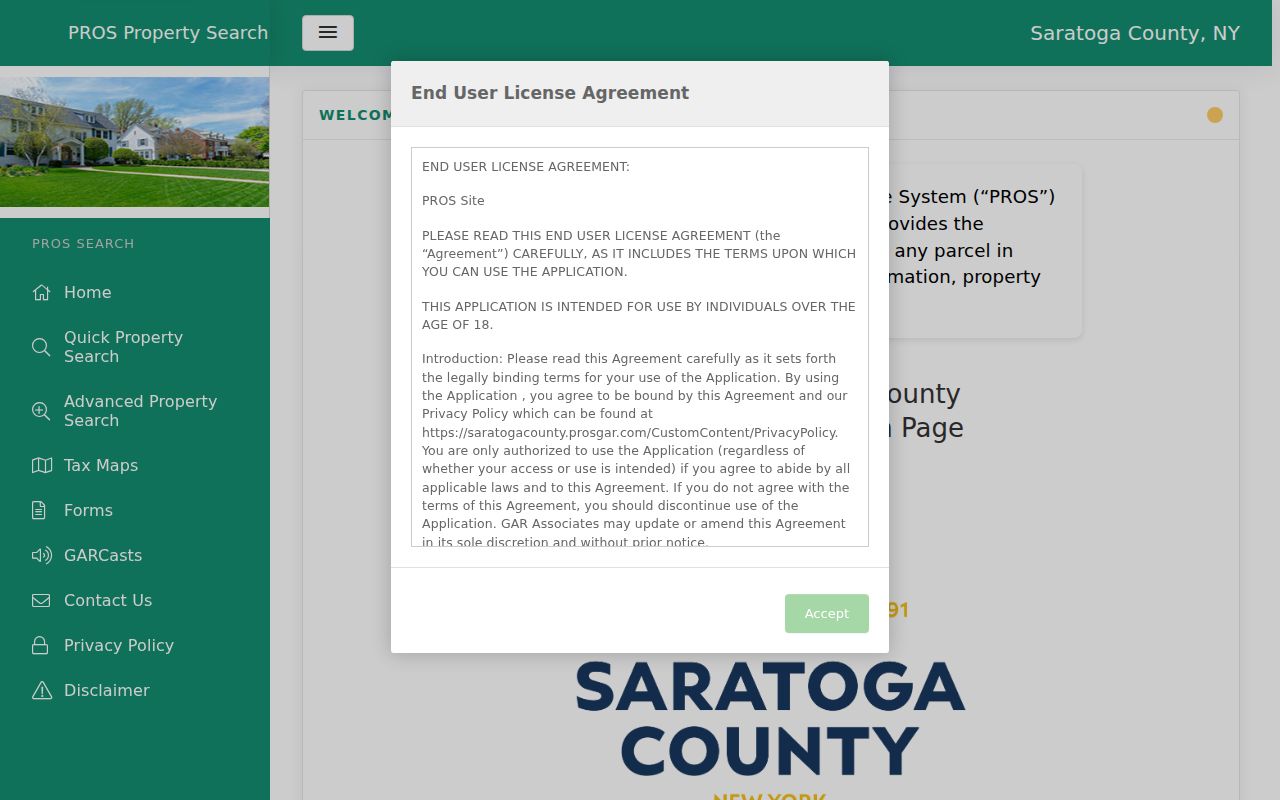
Think of a Saratoga County property search as a sequence, not a single stop. PROS comes first. It returns the parcel lead, the assessment context, the tax-map number, photos, inventory, and comparable-sale material the county itself describes. That gives you something concrete to carry forward.
Deed records come next through SearchIQS. Recorded deeds, mortgages, and related instruments sit there under the County Clerk's authority. Search by grantor, grantee, or the parcel reference you pulled from PROS.
Taxes split into two lanes. Local collectors handle the current tax bill, while the County Treasurer takes most delinquent balances. Turn to the Saratoga Map Viewer and the filed maps whenever a boundary or plat question surfaces, since geography rounds out the picture.
Whatever you find, keep the details attached. The SBL, the municipality, the roll year, and your search date belong beside every finding. That habit is what makes the sequence hold together.
- Saratoga County property-record detail
- Saratoga County property-record detail
- Saratoga County property-record detail
- Saratoga County property-record detail
- Saratoga County property-record detail
Saratoga County Property Records Offices
Saratoga County spreads its property records across several offices. Real Property Services maintains the assessment data and the parcel inventory in PROS. The County Clerk records deeds, mortgages, liens, and other land documents. Local tax collectors handle current billing. The County Treasurer takes delinquent balances. Mapping staff support the tax maps and the viewer that places each parcel. None of these offices duplicates the others. Each holds one piece, and a complete answer usually means visiting more than one.
Saratoga County Recorder / Register of Deeds
40 McMaster Street
Ballston Spa, NY 12020
518-885-2213
Saratoga County Assessor / Appraisal District
40 McMaster Street
Ballston Spa, NY 12020
518-885-2213
Saratoga County Treasurer / Tax Collector
40 McMaster Street
Ballston Spa, NY 12020
518-885-2213
Types of Saratoga County Property Records
The main record types divide cleanly. Assessment records describe value and inventory. They also name the owner of record on the tax roll. Deed records document transfers and run through the County Clerk. Tax rolls and tax bills track the annual levy. Plats, filed maps, and the GIS map cover boundaries and parcel shape. An appraisal file may support a contested assessment. Learn which type answers your question, and you will know which office to approach first.
| Record Type | What It Documents | Kept By | Access |
|---|---|---|---|
| Deeds | Grantors, grantees, instrument dates, and legal descriptions | Saratoga County Clerk | Online index and Clerk copy access |
| Mortgages & liens | Mortgages, satisfactions, assignments, liens, and judgments | Saratoga County Clerk | SearchIQS access |
| Tax & assessment | Assessment values, exemptions, roll entries, and tax status | Local assessors, collectors, and County Treasurer | Public online portal |
| Plats & parcels | Tax-lot shapes, SBLs, and filed map references | County mapping offices and County Clerk | Public online viewer |
| Building permits | Permit status, zoning, planning, and code records | Saratoga Springs or Mechanicville offices | Portal, FOIL, or direct office request |
Each record serves a distinct legal purpose. A deed proves ownership changed hands. The assessment roll sets taxable value for a given year. A plat fixes lot dimensions as filed. The tax bill shows what is owed and to whom. A GIS map displays parcels visually but carries no title authority. Confusing one for another is the most common research error in Saratoga County, so match the record to the question before you trust any single result.
What Saratoga County Property Records Can and Cannot Tell You
These records answer a lot. They show who owns a parcel and what it sold for. They reveal how it is assessed. They also show where its boundaries sit on the map. Deed records trace a chain of title back through generations of transfers.
They have limits too. An assessment lists the taxed owner, not necessarily the current deed holder. A tax map is a reference, not a survey. Nothing here replaces a formal title search or a licensed survey. Treat Saratoga County property records as strong public evidence. Hire professionals when the stakes are legal.
Lawful use. Saratoga County property-record detail
Saratoga County PROS and the 2025 Portal Change
GAR Pros replaced SDG Image Mate on September 30, 2025. Note the portal name and your search date whenever an older screenshot or saved instruction still points to the former system.
Saratoga County Land Records Since 1791
The County Clerk reports land records reaching back to 1791, with county messaging citing more than 25 million digitized documents. Note: online image depth does not equal the office's total holdings.
Saratoga County Tax Rolls and Delinquency
The county posts tax rolls covering 2023 through 2026. Local offices collect current bills, while most delinquent balances move to the County Treasurer after April 1, with Saratoga Springs excepted.
Saratoga County Historic Property Research
When modern names run dry, older material takes over. The Historian holds assessment rolls from 1889 through 1914, early town records, microfilm, maps, and the attic-discovered La Rue Collection, all of it useful for tracing parcels before current indexes begin.
How Saratoga County Property Records Fit Together
No single Saratoga County database holds the complete property record. PROS earns its place as the practical starting point. It connects a street address, owner name, municipality, or tax-map number to an assessment parcel. The result yields an SBL, and that number travels well. SearchIQS serves a different role entirely. It is the County Clerk's route to deeds, mortgages, satisfactions, assignments, liens, judgments, and other filed land records. The tax-roll pages organize each year's assessment and levy figures. The Treasurer handles most delinquent balances once the local collection window closes. The Saratoga Map Viewer adds the geographic layer.
Read these sources as a sequence rather than competing answers. A PROS entry names the assessment owner, but a freshly recorded deed may be newer. A tax map suggests the parcel's shape. The deed, the filed plat, and a survey settle the legal boundary questions. A tax roll shows who was assessed in a given year. It is not a conveyance index. Keep the SBL, municipality, record date, and search date beside each finding. That makes it possible to reconcile those gaps cleanly.
Searching Saratoga County Property Records by Address
The PROS Quick Property Search takes several entry points. You can query by street address, Tax Map Number, SBL, owner name, Street Finder selection, or municipality. County instructions recommend a short street query. Drop the road-type suffix entirely. A form like “5 Pine” avoids mismatches from Street, Road, Lane, Avenue, or their abbreviations. Street Finder helps when spelling or the official road label is unclear, since it exposes the portal’s standardized street list.
Check the returned municipality against your target parcel. Saratoga County holds nineteen towns, two cities, and nine villages. A postal city exists for mail delivery. It may not identify the assessing municipality, a distinction that matters near village lines, around Saratoga Springs, and in the Mechanicville and Riverside area. Once the right parcel appears, preserve the complete SBL. That number is more dependable than repeating a loose address search in every later system.
Deeds, Mortgages, and Recorded Claims in Saratoga County
Recorded land in Saratoga County reaches back to 1791. That is the County Clerk’s own accounting. SearchIQS is the county-linked online entry. The Clerk’s instructions say to enter Party 1 with the last name first. Read each result closely. A useful entry shows the indexed parties, instrument type, document or book-and-page reference, recording date, and legal-description clues. The Clerk publishes no starting year for online images. A missing image therefore does not prove the underlying record is unavailable.
A deed is only one piece of the trail. Mortgages show secured financing. Assignments transfer a mortgage interest, while satisfactions document that a recorded mortgage was discharged. Liens and judgments can matter even when they never change the deed’s grantee. Filed subdivision and boundary-line maps may explain why an old description no longer resembles the current tax parcel. For a certified copy, an older volume, or an unclear index entry, the County Clerk’s office and its public research computers are the proper fallback.
Saratoga County Assessments, Tax Rolls, and Delinquent Balances
Assessment data anchors these Saratoga County property records. The county Real Property Tax Service backs the assessment database, tax maps, roll printing, and the local assessor network. Municipal assessors keep the underlying rolls. PROS opens access to assessment data, inventory, photographs, tax maps, county tax information, and comparable sales. Those fields illuminate a parcel. Assessed value, estimated market value, a recorded sale price, and an actual appraisal are still not interchangeable.
Published tax rolls cover 2023 through 2026. Current taxes start with the collector. That means the relevant city, town, village, school, or other local office. Most unpaid local balances move to the County Treasurer after April 1. Saratoga Springs keeps its own city tax route. When you ask the Treasurer about a balance, provide the parcel SBL, street address, owner or contact name, and municipality so similar properties stay distinct.
Saratoga County Assessment Review and Value Context
New York assessment records demand context. Read them with the local level of assessment and the applicable year. A level of assessment describes how assessed value relates to market value across that municipality. An equalization rate serves municipal and taxing comparisons. It is not a separate appraisal of one house. Saratoga Springs and Mechanicville therefore cannot be judged by raw assessed numbers alone.
Challenge starts with the local assessor. An owner may file Form RP-524 for review by the Board of Assessment Review. Many towns use the fourth Tuesday in May. The local assessor’s published calendar controls in every case. After a final roll, owners of one-to-three-family owner-occupied property or qualifying vacant land may pursue Small Claims Assessment Review, which state material describes with a $30 filing fee. Article 7 review is a separate court process.
Historic Saratoga County Property Records Beyond the Portals
Not everything lives in the portals. The County Historian holds municipal assessment material for 1889 through 1914. That office also keeps early town records, maps, cemetery information, newspapers, and microfilm. Later assessment records stay with municipal assessors. Saratoga Springs assessment holdings remain with the city assessor. These divisions matter when a modern owner search hits a dead end or an old farm, patent lot, neighborhood, or street name fails to match the current SBL.
The La Rue Collection shows why provenance matters. County material describes roughly six hundred late-eighteenth- and early-nineteenth-century originals found beneath attic floorboards. Treat it as a finding lead, not proof that a particular deed waits inside. Patent field books, old atlases, assessment rolls, city maps, and newspaper notices can bridge an old name to a newer deed description. Return the final ownership conclusion to recorded instruments. Boundary questions call for qualified survey work.
Responsible Use of Saratoga County Property Records
Open access is not unrestricted access. Courts keep sealed matters private and limit divorce, adoption, and guardianship files. Vital records answer to state eligibility and genealogy rules rather than a standard FOIL request. New York's Address Confidentiality Program gives qualifying participants a substitute address with mail forwarding. Older public documents stay public.
Lawful uses for Saratoga County property records include title work, boundary questions, tax disputes, and historical research. Planning review also qualifies. The owner of record on an assessment is not proof of who lives there. Data can lag, sit incomplete, or reflect a different record date. For a critical fact, confirm with the custodian. And when the stakes call for professional judgment, get professional help. Bring in a title professional, attorney, appraiser, or licensed surveyor.