
What Saratoga County Property Tax Records Show
Saratoga County posts tax rolls covering several recent years. The PROS system adds the parcel and assessment context you need to find the right row. The fields are not interchangeable. Assessed value, estimated full value, exemptions, and taxes each answer a different question. New York's level-of-assessment and equalization rules complicate things further. Two municipalities rarely assess on the same scale. Comparing their raw figures side by side invites error. Match the municipality, the roll year, and the SBL first. Then the numbers line up.
| Field | What It Shows | Where |
|---|---|---|
| Assessed value | Roll value used in the local tax process | Local assessor and county PROS |
| Market / appraised value | Estimated full value shown for comparison | Local assessor and county PROS |
| Exemptions | STAR and other approved exemptions | Local assessor and county PROS |
| Tax bill & status | Current bill or delinquent balance status | Local collector or County Treasurer |
| Taxing districts | Municipal, school and special district context | Local collector or County Treasurer |
What do Saratoga County property tax records actually contain? The county roll covers several recent years, and PROS supplies the parcel and assessment context for finding the right row. Read the columns carefully. Assessed value, estimated full value, exemptions, and taxes are distinct fields, and mixing them up changes the story. New York's level-of-assessment and equalization concepts add another wrinkle. Because municipalities do not assess on one uniform local scale, figures from two towns should never be compared as though they were. Anchor every number to its municipality and roll year.
Looking Up a Saratoga County Tax Bill
Pulling a tax bill in Saratoga County starts with the right parcel. County tax rolls cover several recent years. PROS provides the parcel and assessment context needed to locate the correct row. Know your fields. Assessed value, estimated full value, exemptions, and taxes sit in separate columns for separate purposes. New York's level-of-assessment and equalization rules matter here too. Municipalities assess on different local scales. Figures from two of them cannot be compared as if produced uniformly. Confirm the SBL, the municipality, and the roll year before trusting any amount.
- Find the parcel in PROS, preserve its SBL and municipality, open the matching roll year, and contact the correct local collector or Treasurer for current status.
- Find the parcel in PROS, preserve its SBL and municipality, open the matching roll year, and contact the correct local collector or Treasurer for current status.
- Find the parcel in PROS, preserve its SBL and municipality, open the matching roll year, and contact the correct local collector or Treasurer for current status.
- Find the parcel in PROS, preserve its SBL and municipality, open the matching roll year, and contact the correct local collector or Treasurer for current status.
- Assessed value
- Saratoga County tax record detail
- Mill rate / levy
- Saratoga County tax record detail
- Homestead exemption
- Saratoga County tax record detail
- Tax lien
- Saratoga County tax record detail
Appealing a Saratoga County Assessment
Before contesting a value in Saratoga County, understand what the numbers mean. County tax rolls span several recent years. PROS supplies the parcel and assessment context for locating the right row. Assessed value, estimated full value, exemptions, and taxes are separate fields. Each tells a different story. New York's level-of-assessment and equalization concepts shape how an appeal is judged. Two municipalities rarely assess on the same local scale. Their raw figures should not be compared as though uniform. Ground any grievance in the correct municipality, year, and parcel.
Appeal window. Confirm the local grievance date with the assessor; most towns use the fourth Tuesday in May, but the local calendar controls.
Saratoga County Tax Rolls for 2023 Through 2026
The Saratoga County roll page lists four years of tax rolls. Match the municipality, roll year, and SBL rather than comparing a current parcel against an older row.
Saratoga County Current and Delinquent Tax Routes
Municipal collectors handle current taxes in Saratoga County. After April 1, delinquent balances generally move to the County Treasurer, except in Saratoga Springs, which follows its own city route.
Saratoga County Assessment Levels and Equalization
A local level of assessment expresses Saratoga County assessed value as a share of market value. An equalization rate is municipal context, not an added parcel tax or appraisal.
Saratoga County RP-524 Review
A Saratoga County taxpayer starts with the assessor and the Board of Assessment Review. The common fourth-Tuesday-in-May date is not universal, so verify the local grievance calendar.
Match Saratoga County Property Tax Records to the Correct Year
Saratoga County property tax records are organized by year. The county tax-roll page posts material for 2023, 2024, 2025, and 2026. Begin with the parcel SBL and municipality. Then select the roll year you need. A prior-year entry can be useful history. It should never be presented as a current assessment or balance. Record the roll type and year beside the owner name, assessed value, exemption entries, and taxing jurisdictions. Later readers can reproduce the result.
PROS supplies parcel context. It may display county tax information, inventory, photographs, maps, and comparable sales. The formal roll and the municipal collector remain separate sources. A property may have recently transferred. The owner shown on an assessment record may trail the deed. Use SearchIQS to confirm the conveyance. Do not treat a tax-roll name as a live title index.
Separate Current Saratoga County Taxes from Delinquent Taxes
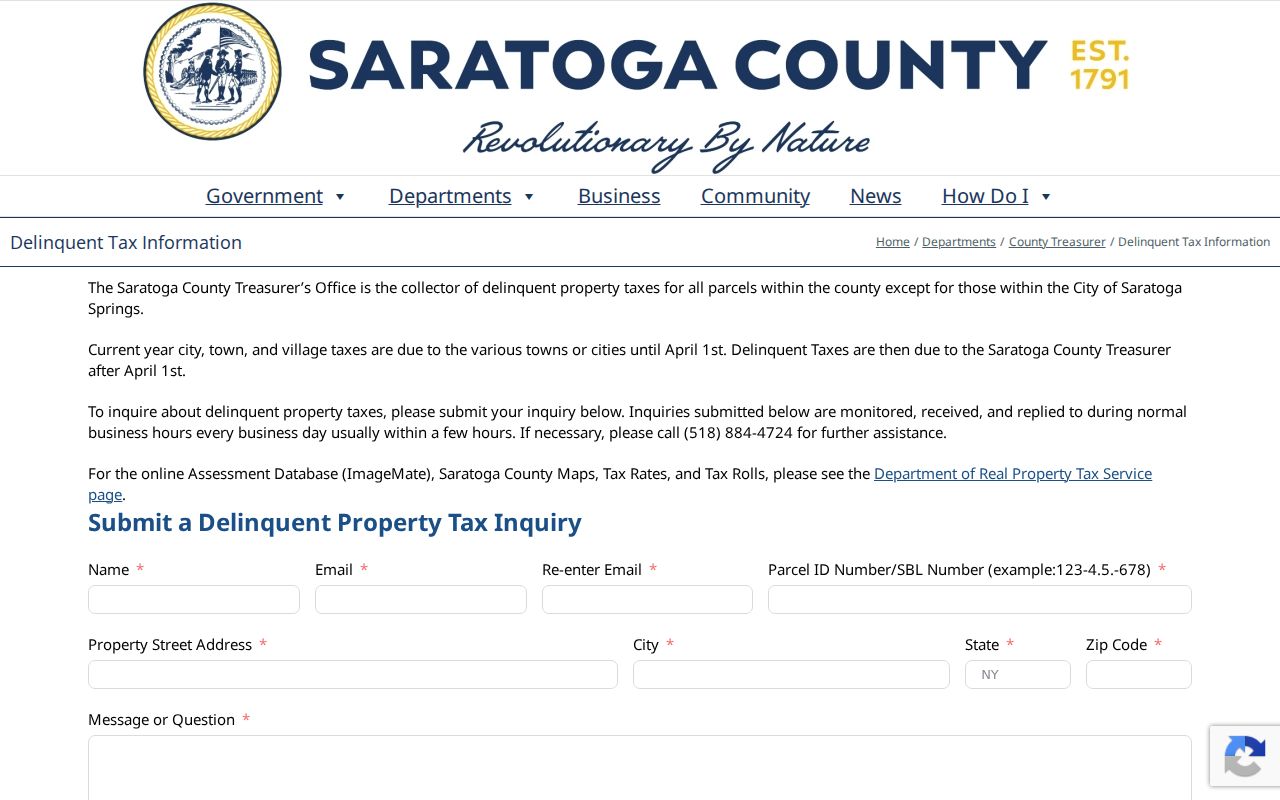
Current property taxes in Saratoga County go through the appropriate local collector. Unpaid local taxes generally move to the County Treasurer after April 1. Saratoga Springs is the stated exception. A city parcel's delinquent status should be checked through the city tax route. This office split matters. It explains why a single county search may not show the complete amount currently due.
The Treasurer inquiry form asks for name, email, parcel or SBL, street address, city, state, ZIP code, and the question itself. Supply the exact parcel key and identify the tax year. A sample delinquent-tax statement in county material uses fields such as SWIS, map number, location, owner, multi-year balances, and payment detail. Those are useful reading cues. The sample is not evidence of a live balance on another property.
Interpret Saratoga County Assessed and Full Values
Assessed value is the figure placed on the local Saratoga County assessment roll. Estimated full value tries to express market-value context using the local level of assessment. New York does not require every municipality to reassess annually. Nor must it assess at one hundred percent. So the year and local ratio must stay attached to any comparison. An equalization rate helps distribute taxing responsibility across municipalities. It is not a second appraisal of the parcel.
Mechanicville's 2026 state context includes a reassessment and a 100.00 local ratio. Saratoga Springs material points to a 2005 reassessment year. A 40.50 ratio applies in the cited 2025 context. Those figures show why two raw assessments cannot be compared without their municipality and year. STAR amounts are also separate fiscal measures. So are tax-base growth factors. So is the county's stated 2026 rate of $1.77 per $1,000. None of them estimates a home's sale price or a complete bill.
Challenge a Saratoga County Assessment Through the Local Process
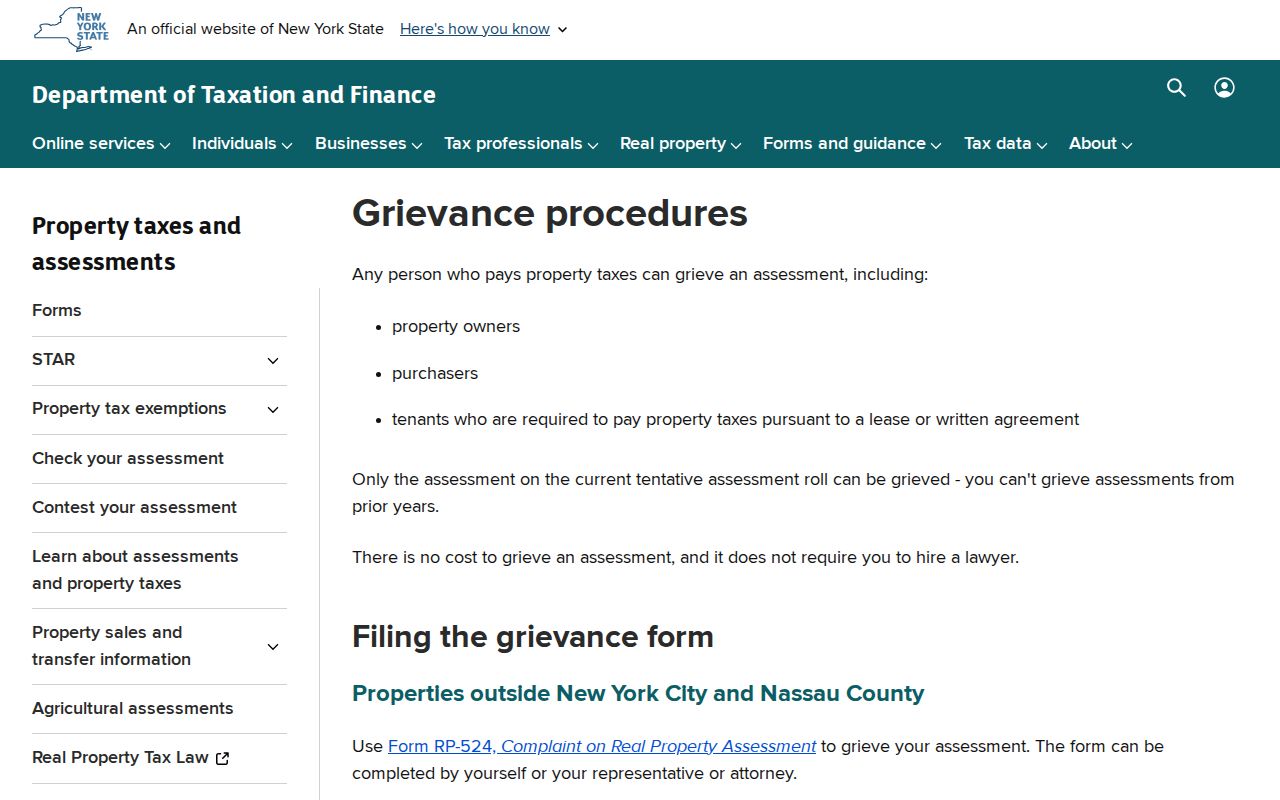
Start with the municipal assessor. Sit down together and go over the inventory, exemptions, valuation facts, and how the parcel sits on the tentative roll. Errors get caught there. If the number still looks wrong, a formal grievance goes to the local Board of Assessment Review on Form RP-524. State guidance calls the grievance a no-cost administrative process. Many towns schedule grievance day for the fourth Tuesday in May, though the assessor's published date controls, so confirm it for your assessment year.
Small Claims Assessment Review opens after the final roll. It serves qualifying owner-occupied one-to-three-family homes and qualifying vacant land, and state guidance sets a $30 filing fee. Article 7 offers a separate route through Supreme Court. Whichever path you take, keep the filed form, any supporting sales or appraisal material, assessor correspondence, and the final decision. Note: an assessment grievance, a tax payment question, and a deed-ownership dispute are different matters handled by different custodians.